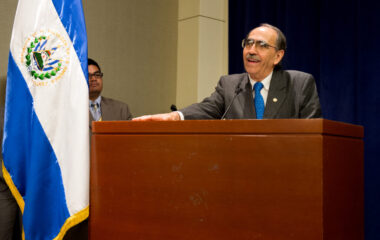
The Salvadoran economy faces five challenges
According to the latest report from the Central Reserve Bank (BCR), it is predicted that the economy could grow around 3.2% this year. However, to achieve this goal, it is necessary to face specific challenges that face the Salvadoran economy.

President Nayib Bukele proposes granting citizenship to those who invest in El Salvador
This past Sunday, the president of El Salvador, Nayib Bukele, said that he would send a battery of legal reforms to Congress. Among these measures is a proposal to grant citizenship to businessmen who invest in El Salvador and other initiatives aimed at favoring investment projects in the country.
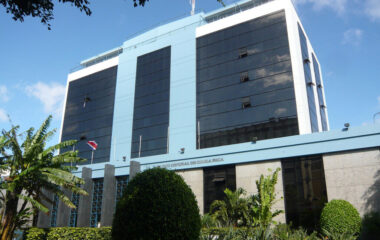
In 2021, the economy of Costa Rica achieved its highest growth in the last 14 years: 7.6%
The environment in which society currently finds itself is characterized by an accelerated process of technological innovation. This will alter how we live, work, and relate to others. Individuals and country’s that do not adapt to these changes will be left behind. Will the Fourth Industrial Revolution in Costa Rica be a threat or an opportunity?

Central America Customs reforms are needed to accommodate growing electronic commerce
Amid the coronavirus pandemic, there was a significant increase in the volume of global online sales and commerce. To address the opportunities that have arisen from these developments, Central America needs Customs reforms that will impose a regulatory framework on such sales.
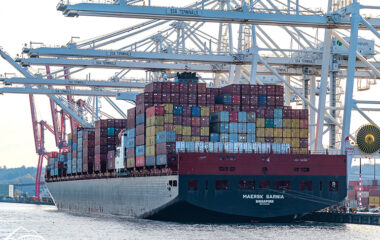
Textiles and plastics are the sectors that boosted Salvadoran exports in 2021
According to a report prepared by the Salvadoran Association of Industrialists (ASI), these sectors contributed almost US $ 3 billion in exports between January and November of last year.

The Fourth Industrial Revolution in Costa Rica: a threat or an opportunity?
The environment in which society currently finds itself is characterized by an accelerated process of technological innovation. This will alter how we live, work, and relate to others. Individuals and country’s that do not adapt to these changes will be left behind. Will the Fourth Industrial Revolution in Costa Rica be a threat or an opportunity?

Renewable energies in El Salvador will be promoted in conjunction with the International Renewable Energy Agency (IRENA)
The country’s National Energy Policy places resources for renewable energies in El Salvador at the center of the country’s economic and social agendas.
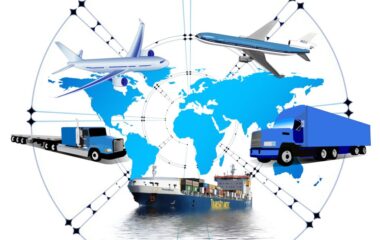
Central America seeks to be the logistics hub of the Americas
The countries of the isthmus aim to collaborate to be a developed logistics center in the Americas to increase its foreign trade with the United States and among themselves.

Nayib Bukele announces Bitcoin City
Two months ago, bitcoin began to be circulated as legal tender in El Salvador. However, its implementation has just taken a new step. President Nayib Bukele will build Bitcoin City as part of his plan to turn his country into a global financia

Meet the El Salvador Aerospace Institute
Hello and welcome to another installation in a series of podcasts by the Central American group. In these discussions. We talk with individuals that have expertise in various aspects of doing business in Central America. Today, we are speaking with and welcoming to the podcast Luis Martinez. Luis is the head of the El Salvador
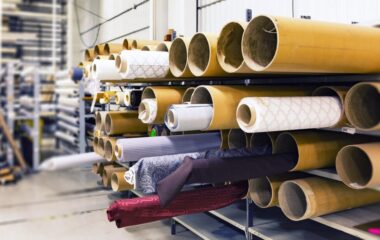
The Salvadoran apparel and textile industry recuperation
The executive director of the Chamber of Commerce of the Salvadoran apparel and textile industry (CAMTEX ) was recently interviewed by a leading trade industry magazine regarding the industry’s prospects as the Covid-19 pandemic ebbs.
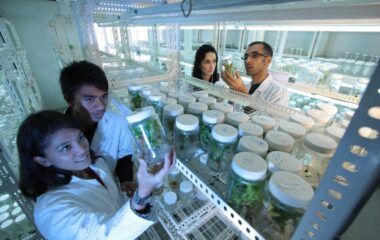
Manufacturing clusters in Costa Rica must be inclusive for the nation to prosper
Costa Rica is in an advantageous position in attracting foreign direct investment (FDI) because of the adaptability of its well-educated workforce that is accessed by firms that decide to locate in the country and because of its proximity to the United States. As a result, the United States is the most prominent investor in manufacturing clusters in Costa Rica.