Contact us if you are in need of assistance in your Salvadoran business venture.
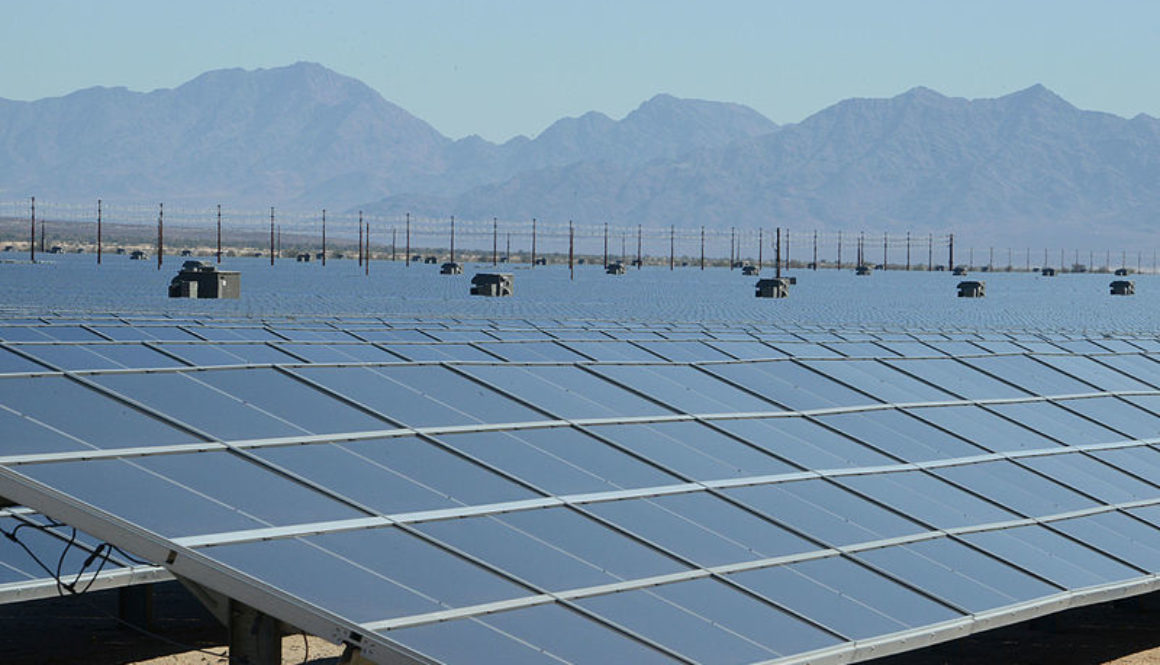
AES El Salvador, a Central American subsidiary of the US power company AES, and the regional firm Corporación Multi Inversiones (CMI) have collaborated to add to the available stock of renewable energy in El Salvador by finishing a major solar project in the country during the fourth quarter of 2019.
El Salvador is considered important to both companies’ leadership because of its location. Executives believe that from there they can service an energy network that feeds all of Central America’s Northern Triangle nations (Honduras, Guatemala, and El Salvador).
Beyond 2019’s Bosphorus Project, which consists of 10 solar plants, AES El Salvador plans to install additional capacity for renewable energy in El Salvador in 2020. The company is advancing an ambitious environmental plan for the region that will allow the affected Central American countries to withdraw or sell some of their fossil fuel power generation plants.
Bosphorus is part of a strategy that includes new investments that, when taken together, aim to prevent the emission of approximately 175,000 tons of CO2 into the atmosphere each year. Furthermore, through the use of renewable energy in El Salvador, and the region as a whole, AES and its partners intend to precipitate the reduction of overall CO2 emissions by 50% by 2022 and 79% by 2030.
In addition to the use of solar, wind, and geothermal sources, countries of the region will move to replace coal and bunker produced energy with cleaner-burning fuels such as natural gas.
According to Juan Ignacio Rubio, president of AES Mexico, renewable energy in El Salvador makes great sense because, in the context of Central America, its electric power system is the one that uses the most petroleum-derived fuels on a percentage-wise basis.
It is generally believed that a move towards more solar and other renewable forms of power will be good for the country and its natural environment.
The president of AES Mexico also asserts that, in addition to reducing CO2 emissions, the Bosphorus project will bring energy cost savings to El Salvador. AES is a US multinational that has operated in Central America for the past two decades. Its main business is electricity generation. The Bosphorus power generation project is a part of a network of renewable energy plants that produce a combined 35,000 megawatts of electrical power in 14 countries.
AES Renewable Energy and CMI in El Salvador: The Last Piece
On October 29, 2019, AES and CMI began operations at the last of 10 plants connected to the Bosphorus project, located in Guazapa, a municipality that is north of the Salvadoran capital city of San Salvador. With this development, phase III of the project (which also includes facilities located in the municipalities of Nejapa and Apopa) was completed.
Seventy percent of the funds that were utilized for the execution of the project came from the Corporation for Private Investment Abroad (OPIC), a financial agency of the US government; the Central Bank for Economic Integration (BCIE); the Dutch Bank for Development (FMO), and the Finnish Fund for Industrial Cooperation (FINNFUND). All four financing entities were in agreement that the renewable energy in El Salvador that will be distributed through the Bosphorus facilities will place energy generation and distribution points closer to consumers. This will have the effect of supporting and enhancing the reliability of the national electrical grid.
Upcoming Plans for Renewable Energy in El Salvador
By the end of 2020, AES El Salvador plans to build a new solar power plant in the western part of the country. It is estimated that this project will inject 10 additional megawatts of power into the national electrical power grid and will move the country toward the AES goal of making El Salvador a strategic point for distributing energy to the countries that make up the Northern Triangle of Central America (Guatemala, Honduras, and El Salvador).
In addition to renewable sources, greater liquified natural gas (LNG) resources may soon be added to the energy mix in Central America. This would be accomplished by taking advantage of the recent opening of a new natural gas plant in Panama. LNG production in Panama could be exported to other countries in the region to serve as a cleaner alternative to the fossil fuel burning plants located on the isthmus.
Contact Us
Please use this form to contact us and we will respond as soon as possible:
The nation’s Central Reserve Bank (BCR) predicts that, because of confidence generated by the government of Nayib Bukele, the economy of El Salvador will grow at a rate of 2.5% in 2020.
Contact us with your questions concerning investment in El Salvador.
The Central Reserve Bank (BCR) forecasts that the economy of El Salvador will expand at a rate of 2.5% in the coming year. This is despite an adverse investment climate in Latin America and the political situation in the United States.
A preliminary balance sheet of the Economic Commission for Latin America and the Caribbean (Cepal) that was released in mid-December 2019, indicates that, although growth for the region as a whole will remain moderate, the economy of El Salvador will see expansion as a result of policies that have been adopted and promoted by the country’s president, Nayib Bukele.
The president of the BCR, Nicolas Martinez, recently noted that it is the “internal factors” that will determine the growth trajectory of the economy of El Salvador in 2020.
Specifically, Martinez credits a paradigm shift in the public sector that has taken place as a result of the installation of the Bukele administration. According to the president of the BCR, the Bukele government has implemented “a more pragmatic, and more user-friendly view of the private sector.” This new pro-business approach will have a “positive impact” on the economy of Central America’s smallest nation. As a result, both domestic and international investors are expressing that they are feeling more comfortable and that they have reactivated their investment plans.
Nayib Bukele assumed power in June 1, 2019 as a candidate of the right-leaning Grand Alliance for National Unity (GANA) after defeating the candidates of the country’s two traditional leading parties, the Nationalist Republican Alliance (ARENA) and the Faribundo Marti National Liberation Front (FMLN). Prior to GANA’s 2019 victory, one of the two main parties (ARENA and FMLN) have occupied the country’s presidency continuously for the last three decades.
The Trump Factor
The United States is El Salvador’s main trading partner and, as such, has a great influence on the economy of El Salvador. According to information compiled by the BCR, one of the major factors that prompted the poor performance of the country’s economy during the first half of 2019 was the trade war between the United States and China.
According to Nicolas Martinez, El Salvador’s Central Reserve Bank supports the US Federal Reserve’s forecast that the United States economy will grow at an average rate of 1.9% over the next four years. The institution’s economists also believe that the pace of US economic expansion will in no way be affected by the impeachment process facing President Donald J. Trump.
GDP expansion of the economy of El Salvador could reach 3%
Martinez also believes that meeting the “good expectations” generated by the Bukele administration could help to boost El Salvador’s Gross Domestic Product (GDP) by up to 3%. He noted that these expectations are linked to plans aimed at addressing the country’s security issues, the new-found cooperation between the major political parties, new programs to bring more workers into El Salvador’s formal economy, and the execution of several large physical infrastructure projects. If all of these things materialize, Central Reserve Bank officers believe that the economy of El Salvador can surpass the 2% growth that it has experienced for most of the past ten years.
Economic Recovery
El Salvador’s economy recovered its pace in the third quarter of 2019 from the uncertainty that was generated by February’s presidential election. During this period, the economy of El Salvador grew at a rate of 2.7%. Martinez points out that “in the third quarter the economy was more dynamic than in the first and second quarters,” which recorded a total growth of 2.3% and 1.9% of GDP, respectively. The president of the BCR also emphasizes that the country grew “little” and recorded a “slowdown” during the first six months of the year. This lapse was driven by the presidential elections and the fact that fiscal issues and issues pertaining to economic reform were yet to be clearly defined.
Finally, Nicolas Martinez, notes that this situation was overcome in the third quarter and was aided by the high approval rating achieved by the newly installed Salvadoran government. In a very short period of time, the administration of President Nayib Bukele has succeeded in creating what is perceived by the private sector to be a pro-business climate.
Contact Us
Please use this form to contact us and we will respond as soon as possible:
Researchers at the prominent Latin American financial services company, Grupo Bancolombia, anticipate that economic growth in El Salvador will make the country an attractive investment destination in 2020.
All indications are that economic growth in El Salvador will be superior to that of other Latin American countries at the end of 2019. According to the nation’s Reserve Central Bank (BCR), forecasts are that the Salvadoran economy will close out the present year with an expansion in Gross Domestic Product (GDP) of a healthy 2.5%. All indications are that similarly positive results will be achieved in 2020.
According to Juan Pablo Espinosa, Chief Economist and Head of Economic, Industry and Market Research at Bancolombia, continued economic growth in El Salvador will make the country an attractive destination for foreign investors.
The specialist believes that an influx of productive foreign capital can become energized to act as an engine of growth for the Central American nation’s economy during the coming year. He also believes that, in order to ensure the expansion of El Salvador’s Gross Domestic Product (GDP), that the country’s policymakers must continue to adopt measures that will maintain inflation stability and impose fiscal discipline. Economic growth in El Salvador will also enhance its chances for continued expansion through the promotion of favorable regulations for entrepreneurs, as well as by implementing mechanisms to make digital adoption and innovation more widespread throughout the nation’s economy.
Espinosa added that an improvement in the prevailing security conditions found in the country will also help to secure a steady future of economic growth in El Salvador. This is an issue that will affect the willingness of entrepreneurs, both domestic and international, and foreign capital to implement productive investment in the country.
Another factor that will affect economic growth in El Salvador is domestic consumption. The International Monetary Fund anticipates that, while this growth indicator will register a modest .2% increase this year, the figure will expand to just above 1% in 2020. It is forecast that economic growth in domestic consumption in 2021 will near 2.3%. This will represent an above-average rate of performance for the entire Latin American region and demonstrates that the greatest strength and growth opportunity for a country like El Salvador remains its domestic market.
In contrast to these positive prognostications, potential threats also exist that will may affect continued economic growth in El Salvador. For instance, the global economy may just be entering a period of slowdown, or economic headwinds might affect the rate of growth of its main commercial partner, the United States. Despite these possibilities, however, Espinosa feels that the Salvadoran economy is now enjoying a period of solid macroeconomic stability. Much of this state of affairs can be attributed to the dollarization of the Salvadoran economy that was implemented in 2001. Dollarization helped the prospect of economic growth in El Salvador by enabling the country to stabilize what had been historically high rates of inflation. Evidence of these conditions has been recorded in the 2019 World Economic Forum Competitiveness Report.
Economic growth in El Salvador could be impacted by a global slowdown
Multilateral agencies such as the International Monetary Fund (IMF) have shown concern related to the performance of the world economy in 2020. This stance has been adopted, in part, by the effect on the world economy of the trade war between China and The United States.
Espinosa observes that “Simultaneous events that are occurring in the world are risks to emerging economies such as that of El Salvador. The trade war between the United States and China will be a factor for the foreseeable future. This is because the dispute between the two economic powers goes far beyond the tariff issue and into the realm of politics. In addition to tariffs and political considerations, China and the United States are at some odds over things such as the Asian giant’s development strategy, Chinese supremacy in industries such as telecommunication, as well as over issues having to do with global 5G standards. These are problems that will not be solved in the short term and will be a part of the conditions that shape the global economic landscape.”
In contrast to anticipated economic growth in El Salvador, Bancolombia researchers view Latin America’s major economies as being vulnerable. They note that economic growth amongst these countries has been expanding at a modest pace.
Contact Us
Please use this form to contact us and we will respond as soon as possible:
The Central American Group: Hello and welcome to another installation of the Central American Group’s series of podcasts. In these conversations we speak to people that are internal and external to the organization. Today, we’re pleased to welcome somebody that is outside of the organization from a group called PROESA. PROESA is the foreign investment promotion arm of the government of El Salvador. Joining us today is Javier Galdamez. He is the investment director of PROESA in El Salvador. How are you today, Javier?
Javier Galdamez: Hello, I’m fine. Thank you.
The Central American Group: Could you please tell us a bit about yourself and PROESA in El Salvador?
Javier Galdamez: Yes, my name is Javier Galdamez. I am the Investment Director for PROESA in El Salvador. I have been hired by the country’s new government. I have been working in investment promotion for the past six years in the Salvadoran Ministry of Foreign Affairs, which had a different twist. This is because it was mainly focused on investment from our diaspora, but now I received the opportunity to bring all the good work that was being done in the area of Salvadorans living abroad as well as to look at things from a broader perspective. Now we are working with PROESA, the investment agency in El Salvador, in three main areas: One is export promotion. Another area is foreign investments, and the third is PPP or public-private partnerships.
The Central American Group: That’s interesting. There’s one thing that we would like you to comment on. It is how the recent election of your country’s new young president (37 years old) has affected El Salvador’s business promotion, and how he proposes to make the country more business friendly?
Javier Galdamez: President Bukele is 37 years old, as you said. He is impregnating the whole government structure with a new dynamic. It’s being done mainly by using social media to move beyond campaign promises and in order to produce results. His main focus is what you find in the private sector. It’s based on results. If you don’t have results, you’re lost.
Just as is with the case with the US, Twitter is becoming a relevant platform. In this case, we are continually being informed and generating regular content so that the population gets to know more up front. They are being informed as to what is going on and as to know what the aims of this new government are. Within these aims there are two main issues that are being considered. The first one has to do with crime rates. The new government has implemented a territorial program that has been going on since day one of the new administration. We have been receiving very positive feedback regarding numbers. We are seeing an overall decrease in the crime rate. This is why we have received an improved rating for travelers from the US from the US embassy in El Salvador. We have moved from a Category 3 to a Category 2. People from the US can come and do business, can come and do tourism, because the numbers are speaking for themselves. Actually, yesterday was one of the days that have recorded the least crinminality. What is going on in this important area is very positive.
The second issue has to do with the president, himself, being a businessman. The government structure has been reviewed in order to make it very pro-business. We are reviewing each institution in order to determine what each one can build upon to facilitate doing business in the country. This has to do with the new philosophy that is being implemented by the government and PROESA in El Salvador.
The Central American Group: That’s interesting. I had the pleasure of traveling down to El Salvador and had an opportunity to go a little bit around the country. At least from my perspective, things were tranquil, and it looked like a good place to go.
As far as the new government and PROESA in El Salvador are concerned, what are the sectors that you are seeking to lure investment from?
Javier Galdamez: Exactly. As you may know, we are a part of the whole hemispheric network of free trade agreements. We have a lot of free trade agreements. The most important one is CAFTA-DR, which is the one that Central America and the Dominican Republic negotiated with the US. All of the investor protections that you find under Chapter 10 of the agreement pertain to foreigners, as well as to Salvadorans in the exterior that live abroad and come home to make investments. They are already considered foreign investors, as well.
As PROESA in El Salvador, we are trying to become more efficient. The instruments that we already have in place will be optimized in their use. The government and PROESA in El Salvador are focusing on agroindustry, aeronautics, energy, light manufacturing, offshore business services, textiles and apparel, tourism, and public private partnerships is another component.
PROESA in El Salvador has conducted many different studies through various consulting services in order to identify what are the are the investment opportunities that are available within each of these sectors. For example, in aeronautics, we find that we are well-suited to do commercial aircraft maintenance, and helicopter and corporate aircraft maintenance. These are specific opportunities to pursue. There is legislation in this area that creates incentive for companies to engage in these activities in El Salvador.
In addition to aircraft maintenance, there are incentives to distribute and service aircraft parts, maintain components, provide aeronautics ground services, manufacture aircraft harnessing systems, etc. This is just an example in one sector of what PROESA in El Salvador can help foreign investors to do. Another example is agroindustry. In this sector we have cocoa. The genetics of the cocoa that is found in El Salvador makes us one of the 18 top members in the Chocolate Hall of Fame. What is the significance of this for PROESA in El Salvador? This just example of one of the products that we have to offer that have significant potential. Additionally, there are other sectors that fall within the category of agroindustry that we feel that we can participate in.
The Central American Group: We see a lot of industry in the area of textiles. Can you tell us how the textile industry in El Salvador is vertically integrated?
Javier Galdamez: That has a lot to do with a strategy which was built upon by PROESA in El Salvador many years ago. We are rethinking the strategy of having a vertically integrated industry to be able to access markets.
In this case, we did a study and found the main anchors in the industry in order to bring in that specific investment. Doing this we then brought in more investors to complete the textile industry value chain in El Salvador. We are the only country that has been able to form a complete synthetic cluster in Central America. This was done as a vice presidential effort many years ago that represents a “best practice” of the past that we might be able to upgrade and modernize. For El Salvador the textile is important and quite vital. It represents 46% of our country’s total exports. Textiles is very relevant to our economy and we have learned a lot of lessons in this sector. There are many opportunities for investment in the textile industry in El Salvador. These include things like the manufacturing of yarn and fabric, and knitted garments and accessories, for example. We can also do athletics wear, sportswear, performance wear, and swim wear. Textiles and apparel has its own logic, and that brings us to a discussion of strategy. It is important for the government and PROESA in Mexico to establish priorities for the types of investments that it is seeking to attract. We need to knock on potential investors door and explain to them what we are able to do for them. They can tell us what they need to come to El Salvador. That discussion is an ongoing discussion.
In addition to PROESA in El Salvador working to attract industry to the country, other entities such as the Secretariat of Commerce and Investment may be involved. This is a newly created secretariat that has been established by the new president, Nayib Bukele. The Ministry of Economics and the Ministry of Agriculture can be involved in investments that have to do with agroindustry.
The Central American Group: What kind of approach will you have from the perspective of digital marketing? I know that is one of the tactical areas that you are looking into at this time.
Javier Galdamez: There is a lot of logic for PROESA in El Salvador to enter a 2020 approach to promoting the country. We know that if you are not online, you might as well not exist. The whole government, which is something that I am pretty proud of, has dedicated to it a specific secretariat that is going to define a digital promotion strategy.
When we are talking about digital platforms that we are looking to create, we are talking about data, users, competition, and network effects. We are talking about two different types of users. On one side you find the common aggregate user. This could be a citizen or a foreign investor. On the other side you find a governmental actor. This is the one that provides a service and solves problems. This side produces content and creates the link point for users to act as citizens or investors. The strategy is including a digital view of how doing business with PROESA in El Salvador should be a streamlined process. We are looking at the proposition of cutting the red tape with technology. We are looking to make the experience of investing in El Salvador an easy one. Technology is the way to go to achieve this objective.
To summarize, our digital approach will take into account a pro-business point of view. This is the view that we wish to impregnate in every single aspect of doing business in El Salvador. We have a way to go to achieving this, but this is what is going on in El Salvador right now.
The Central American Group: Given what PROESA in El Salvador is doing and what your government is doing to make doing business in El Salvador easier through digital means, it seems that you have good prospects for the future.
Javier Galdamez: I think so. We will try to make a very impactful effort related to where we are going to “hunt” for investment.
The US is such an important business partner for us. We see this in every aspect of our data. The second most important market for us is the Central American region. This is especially the case with Northern Triangle countries which would include Honduras and Guatemala. In terms of importance, the European Union would be in third place. As you can see, we are already speaking in terms of free trade agreements with each of these states. Our idea is not to discriminate among investors and to treat them as we would domestic investors. We want to give them as good treatment as possible. Protections are already in place to make transactions as far and as equitable as can be. We have an investment law and other things that are in place. For example, El Salvador has its International Services Law, a Renewable Energy Law, as well as legislation that addresses tourism that grants investors additional incentives. PROESA in El Salvador is here to act as your liaison and to prepare you with information. PROESA is your partner form the pre-establishment phase up to the post-establishment phase. We also provide aftercare for our clients. Investors can begin, however, by looking for PROESA online. PROESA in El Salvador can prepare a specific agenda that addresses investors interests and needs.
The Central American Group: You have made it very clear that PROESA is equipped and ready to give foreign investors help in terms of navigating what needs to be done in El Salvador. Many times, we generate questions from listeners to these podcasts. We like to make it possible for them to communicate directly with people like you.
If people that have listened to this recording have questions how can they get in contact with you directly?
Javier Galdamez: People with questions can send them to my personal institutional email. I will then redirect the question to the appropriate investment specialist. My email at PROESA in El Salvador is jgaldamez@proesa.gob.sv.
Contact Us
Please use this form to contact us and we will respond as soon as possible:
Increasingly robust, the service sector in El Salvador has made the nation’s economy much more diversified.
The service sector in El Salvador now dominates the nation’s economy
Central America’s smallest nation’s new System of National Accounts has ratified what many economists have already observed in practice: the service sector in El Salvador contributes the most to the country’s national economy.
While traditional agricultural activities comprise only a small fraction of Salvadoran Gross Domestic Product (GDP), the service sector makes up almost 70% of the nation’s economic output.
To be more precise, this nation of approximately six million inhabitants is dollarized and its economic participation structure is divided mainly among three sectors: service activities (69.3%), manufacturing industry (16.1%), and agricultural activities (5.9%).
In the first quarter of 2019, the net flow of Foreign Direct Investment (FDI) that was injected into the Salvadoran economy amounted to US $177.3 million. These resources were mainly associated with the services sector in El Salvador, including finance (US $91.5 million) for operations of shareholding companies; the electricity sector with US $75.5 million (mainly for renewable energy projects), as well as air transport and logistics activities with US $59.1 million.
The service sector in El Salvador has also produced companies that are active in the area of software development. Salvadoran companies have been able to win first place in the Gaming Pitch 2018 at the convention of the Latin American Association of Service Exporters; and Stonebot Studio, with its video game “The Last Friend,” was selected to be among the top 40 productions at the Media Indie Exchange event at the recent Electronic Entertainment Expo.
Current conditions create opportunities
Experts believe that El Salvador’s current stability can enable the nation to experience sustained economic growth. The country can hope to achieve this, however, only if policymakers develop strategies that incentivize investment rather than consumption.
The new Salvadoran administration of President Nayib Bukele has prioritized the service sector in El Salvador, as well as the country’s economic development as a whole. For the past 70 years, El Salvador’s yearly GDP growth has rarely exceeded a rate of 2%.
The country did surpass this figure, however, in years that coincided with the construction of large-scale projects or the sale of state assets.
Although the nation was once considered to be the “Japan of Central America,” it has, until recently, lagged behind its regional neighbors in its ability to attract foreign direct investment. While family remittances (mainly from workers in the United States) provide funds for Salvadorans to give a boost to the domestic economy through spending on goods and services, El Salvador’s Ministry of Finance views the attraction of greater investment, both public and private, to be the healthiest way to precipitate sustainable and balanced growth.
Salvadoran policymakers are looking towards their neighbor, Panama, as a model that they might be well-served to follow. Panama, for example, grows by an average of approximately 6% each year. This is accomplished by investing the equivalent of 44% of its Gross Domestic Product (GDP), which represents a figure that is close to US $44 billion.
El Salvador, meanwhile, maintains low rates, with an investment at the end of 2018 totaling approximately US $4.2 billion. This figure is equivalent to only 16% of the national GDP. Most of this capital investment, however, is in the service sector in El Salvador and is private in its funding sources.
Through the Bukele administration’s recently developed and implemented “Cuscatlan Plan,” the government of El Salvador has established a five-year road map aimed at using resources in both the public and private sectors to grow the nation’s economy.
Contact Us
Please use this form to contact us and we will respond as soon as possible:
Consolidation of cargo under the International Services Law in El Salvador can result in cost savings. Contact us with your questions.
The Central American Group: Hello. Welcome to another installation of the Central American Group’s series of podcasts. In these discussions, we speak with individuals that are either external to the Central American Group or external to the Central American Group.
Today we have Miguel Flores with us. He is with Loginter, or Logistica Internacional, which is part of the Central American Group. Miguel, can you tell us a little bit about yourself?
Miguel Flores: Yes. I have been in the logistics business since 1985 and I joined Loginter in 2008. Loginter is based in El Salvador. Very soon we will open an operation in Costa Rica in the Central American Group’s Green Park. So, greetings to everybody from Costa Rica.
The Central American Group: Well, thanks a lot. It must be beautiful down there.
We have several questions that we would like to ask you today having to do with the services that are offered in both El Salvador, and very shortly, in Costa Rica. Let’s talk about consolidation of cargo under the International Services Law in El Salvador.
Can you tell us about this service?
Miguel Flores: Yes. This Law was especially designed several years ago in El Salvador. It was implemented about the time I began with Loginter. It was done specifically for consolidation. The Law allows for cargo to come to our facilities from different shippers that are manufacturing products in El Salvador. They bring their goods to our facilities.
We receive partial cargos from different vendors. Then, as soon as we have enough cargo to fill a container, we do the consolidation of cargo under the International Services Law in El Salvador. The next step is that we export the cargo. In this manner, several vendors can use one single point of origin. Doing this increases the efficiency of containers, so that there is no unused space.
This creates control over the cargo on behalf of the buyers, as well. Because once the cargo arrives at our warehouse. The buyer has full control over it. They are the ones that decide when and to where the cargo will be shipped. Already, for example, we have cases that we are going to call “multi-country consolidation.”
This means that one buyer that is producing goods in other countries in the region such as Nicaragua, Honduras and Guatemala can take advantage of consolidation of cargo under the International Services Law in El Salvador. Following this Loginter can ship the cargo to its final destinations. We currently use this model for one American company to send to markets that are not typical for us such as Australia and emerging markets. This model has been proven and tested by us and by our customers. Also, the Law of International Services allows us to get cargo from local companies that are located in free zones or are operating under “stand-alone” regimes. We can collect cargo from any country that is working in El Salvador. That, in a general sense, is the idea of consolidation of cargo under the International Services Law in El Salvador.
The Central American Group: What are the advantages services for the consolidation of cargo under the International Services Law in El Salvador?
Miguel Flores: For example, you can have one single shipper sending cargo to multiple consignees. These shippers can send the cargo to our facility. Then we segregate the goods and we dispatch to cargo based upon the purchase orders that the vendor has produced.
Shippers can send partial cargo to our facility. They do not to store the goods in their facilities. Our customers use Loginter’s facilities as an intermediate warehouse. The vendor is using his facility as a production plant, not a warehouse.
Another example is that there are some cases that the vendors are producing partial cargos. These are quantities of goods that will not fill a container. We can collect goods from these companies and send it them to one specific locations. Consolidation of cargo under the International Services Law in El Salvador creates a savings for the consignee or for the buyer of the cargo. Additionally, the INCOTERMS can be flexible. Instead of using DDU Miami, the customer can use CFS Loginter. Once the cargo enters the facility, it is under the control of the buyer. The vendor then receives his payment, but the cargo is fully under the buyer’s control. Under these conditions with the consolidation of cargo under the International Services Law in El Salvador, the purchasing party has great visibility of what they have in El Salvador. The buyer does not need to wait until he opens his containers at their destination warehouses and distribution centers in the States. He will know exactly what is inside of the unit.
The Central American Group: What kind of businesses would use the service of consolidation of cargo under the International Services Law in El Salvador?
Miguel Flores: The government of El Salvador created this law to try to cover all of the different types of businesses that are found in the country. This mechanism can be used by a local Salvadoran company or any company that is located inside or outside of a free zone. Any producer of goods can use this service.
The Central American Group: Who else can do consolidation of cargo under the International Services Law in El Salvador?
Miguel Flores: This can be done only buy logistics companies such as Loginter. This law is a strict one. We spent a year fulfilling all the requirements and all of the authorizations of the government institutions in El Salvador. Licenses are given only to companies that have demonstrated that they comply with local laws and with regulations related to safety, infrastructure, and human resources. Only companies that are authorized carry out the consolidation of cargo under the International Services Law in El Salvador can operate as such.
The Central American Group: Do you have any customers currently operating under the International Services Law in El Salvador?
Miguel Flores: Yes. We have one customer that has been operating under the International Services Law for two or three years. It is a very famous US brand that have different vendors working in El Salvador. They changed the INCOTERMS and now, once cargo is delivered to Loginter, they have full control. We receive trucks large and small from three, four, or five different vendors. We get the cargo. Then we start scanning the cargo, that is we scan each box that has been delivered to our facility during the week. Then we transfer this information in a file to our customer’s system, so they have the visibility of what type of cargo is warehoused in Loginter. Following this they communicate to us which purchase orders need to be dispatched to various destinations in the United States. We are working under conditions of just-in-time delivery. The customer is cutting its warehousing expenses in the United States. Of course, it is less costly to warehouse goods in a facility in El Salvador than one in the US. In other words, we act as our customer’s warehouse in El Salvador. Additionally, we act as their eyes and their control in the region. For instance, if we see a box or a label that has been damaged, we immediately inform the shipper so that they can rectify the situation. We ensure that the shipments are processed free of problems.
The Central American Group: Miguel, one last question: you mentioned to us that you are speaking with us today from San Jose, Costa Rica. You also mentioned that you are already up and running and have been for several years in El Salvador. When do you expect that operations will begin in Costa Rica?
Miguel Flores: We have already received authorization from Costa Rica’s Procomer. We are going to operate a facility for the consolidation of cargo under the International Services Law in El Salvador with our partners at the Green Park. The warehouse that we will operate in is almost complete. We are now working on the distribution of the racks, the location of the cargo receiving areas, and other small things that need to be clarified.
In the big picture, we are planning to open the Costa Rica operations in January of 2020. This is because we have already completed the entire process that the authorities here request that we abide by. Fortunately, thanks to our experience in the group and to the lawyers that we have to guide us we are on schedule. The lawyers have done a wonderful job. Basically, in a few months I hope that you will be invited to see our opening.
The Central American Group: That’s great. We have been talking about the consolidation of cargo under the International Services Law in El Salvador. What are some of the other services that Loginter offers?
Miguel Flores: We can, for example, provide customs clearance for inbound shipments and the last mile of the cargo. This means that we have two trucking companies that can bring containers from the port to our warehouse. Again, this is for inbound.
Also, we can do the last mile from our facility to the port. So, we have trucking companies dedicated to these kinds of services. We work with companies that provide freight forwarding. We have succeeded in signing preferential contracts with all of the shipping lines that operate throughout Central America. This makes us very competitive when it comes to ocean freight in the region. In effect, we can cover all the services that are required by companies that are seeking to do business in the region. We have the contracts and the partners that give us the support to be able to cover the area.
The Central American Group: That’s good to know and we know that, perhaps, there are individuals that are listening to this podcast that may have additional questions related to Loginter and its services. That being the case, how would someone with a question get into contact with you?
Miguel Flores: Please go to www.thecentralamericangroup.com and navigate to the form on the website’s contact page. Immediately, one of our people will contact you to speak to you about your needs in the region.
The Central American Group: Again the URL for the webpage is www.thecentralamericangroup.com. Miguel, I want to thank you for taking time out of your busy day to speak with us. It has been a pleasure, as always. We hope that you have a nice day, and we wish you well.
Miguel Flores: Many thanks. As the Costa Ricans say “Pura Vida.”
Contact Us
Please use this form to contact us and we will respond as soon as possible:
The Central American Group: Hello. Welcome to another installation of the Central American Group’s series of podcasts. In these conversations, with people both inside and outside of the Central American Group, we discuss things that are relevant in terms of doing business in the region. Today Jacques Couwels is with us. Jacques is with a company called Gold Service, which is headquartered in San Salvador, El Salvador. Today we will have a conversation on opening a business in El Salvador. How are you doing today Jacques?
Jacques Couwels: Everything is fine. Thank you very much for inviting me to be here.
The Central American Group: We are very pleased that you decided to join us to lend some information on opening a business in El Salvador. Could you tell us first a little bit about yourself and a little bit about the company that you represent?
Jacques Couwels: With pleasure. I am a business administrator with a master’s degree in finance. I have ten years of experience advising foreign investors that have an interest in opening operations here in El Salvador. I deal mostly with regulatory matters.
Gold Service is a law firm that specializes in company incorporation, intellectual property services, and corporate and legal advice. It has more than twenty-three years of experience in the market.
The Central American Group: So, you know everything that a foreigner needs to do when opening a business in your country. To start with the first question, is it possible for a foreigner to open a company in El Salvador?
Jacques Couwels: Yes. It is possible for a foreigner to in El Salvador. There is no restriction for either a natural person or entities.
The Central American Group: Are there any industries that are restricted or is everything open to foreign capital?
Jacques Couwels: Everything is open to foreign capital.
The Central American Group: When opening a business in El Salvador, is it necessary to reside in the country?
Jacques Couwels: No. It is not necessary to reside in El Salvador. A foreign shareholder will require only to request a Salvadoran taxpayer ID.
The Central American Group: Ok. That seems fairly cut and dry. Is it necessary to travel to the country when opening a business in El Salvador? Do you need to have a physical presence there? Jacques Couwels: It is not necessary. If the shareholders cannot come to El Salvador to sign the articles of incorporation, then they can grant a power of attorney to do it. Also, it is possible to incorporate a company and then transfer the share certificates.
The Central American Group: What is the minimum registered capital that is required to incorporate a Limited Liability Company (LLC) in El Salvador?
Jacques Couwels: Currently, when opening a business in El Salvador, the minimum capital requirement to establish an LLC is US $2,000.00. (The US Dollar is the currency used in El Salvador).
The Central American Group: OK. I have always had this question in my mind. Could you clear it up for me? What is a SA and an SRL, and what is the difference between them?
Jacques Couwels: Well, when opening a new operation, we have SA and also a variable which is SA de CV which means “Sociedad Anonima de Capital Variable.” This is the equivalent of a limited liability company in the United States. It is a capital company and has the option of varying capital during the life of the company.
The Central American Group: When customers of your and investors are opening a business in El Salvador, is it necessary to pay the registered capital amount at the moment of incorporation?
Jacques Couwels: No. They must pay at least five percent of the capital and the rest within one year.
The Central American Group: How many shareholders are required when opening a business in El Salvador?
Jacques Couwels: In El Salvador, it is mandatory to have at least two shareholders.
The Central American Group: OK. What is the process to incorporate an LLC in terms of the time that it takes? How long does it take when one is opening a business in El Salvador?
Jacques Couwels: To register the articles of incorporation and to register at the Registry of Commerce takes approximately five working days.
The Central American Group: OK. You’ve spent the last ten years working with foreigners that are opening a business in El Salvador. If someone were to ask you today what would be the most prominent areas of the Salvadoran economy to invest in? What would be your advice?
Jacques Couwels: Well, El Salvador has many sectors that promise good opportunities for foreign investors. We have the textile and apparel industry, the offshore business services sector, tourism, aeronautics, agroindustry, and light manufacturing. One of the most prominent sectors for me is that of tourism. I think that it has good potential that we need to develop and there is a good opportunity for investors here.
The Central American Group: Well, I know that you have beautiful beaches there. I’ve had the pleasure of visiting one of them. I saw those nice waves that you have down in El Salvador for the surfers.
Jacques Couwels: Yes, we have nice beaches with warm water that we have to develop.
The Central American Group: I know that there are probably further questions that come to the mind of the listeners of this podcast about opening a business in El Salvador. If they want to contact you, is there an email address that they can use to be able to ask you questions directly?
Jacques Couwels: Of course, the email that they can send any questions that they have about opening a business in El Salvador is gs@goldservice.com.sv.
The Central American Group: Could you please share the URL of your company’s website with the listeners? That will be appreciated as well.
The Central American Group: Well, it has been a pleasure to talk to you, Jacques. I wish you good luck and, hopefully, you will see a lot of people from outside of El Salvador that are interested in opening a business in El Salvador. Also, hopefully, they will bring more investments to your country.
Jacques Couwels: Again, thank you very much for inviting me to be here. It has been a pleasure.
The Central American Group: Thank you and have a great day.
Jacques Couwels: You too.
Contact Us
Please use this form to contact us and we will respond as soon as possible:
The Port of Acajutla is on the Pacific Ocean and is El Salvador\’s main commodities and container shipping point. Miguel Flores, CEO of Logistica Internacional talks to the Central American Group.
The Central American Group: Hello and welcome to another installment in the Central American Group’s series of podcasts. In these discussions, we talk with individuals that are expert in issues that have to do with regional economics in Central America. We also discuss commerce and trade. Today we are speaking with Miguel Flores. He is the CEO of that is based in San Salvador, El Salvador called Logistica Internacional or Loginter, and today our discussion will be on the subject of the commercial Port of Acajutla.
How are you doing today, Miguel? Miguel Flores: Hello. How are you? I hope that we can provide and exchange some good information on this podcast.
The Central American Group: I’m sure that we can. Today the discussion is on the subject of the Port of Acajutla, which is located in El Salvador. Can you tell us a little bit about where that is in terms of the geography of your country?
Miguel Flores: Yes. Acajutla is our main port. It is located in the state of Sonsonate, which is in the northeast part of El Salvador. As a reference, the Port of Acajutla is close to Guatemala.
The Central American Group: When did the operations at the Port of Acajutla begin?
Miguel Flores: The Port of Acajutla is operated by a governmental entity called CEPA, which stands for Comision Ejecutiva Portuaria Autonoma. This organization was founded in the 1950s and has been operating the Port of Acajutla, as well as the airport and the Port of La Union. La Union is another port which was built on the Gulf of Fonseca very close to Honduras. CEPA manages the logistics corridors for our country.
The Central American Group: What type of vessels does the Port of Acajutla accommodate?
Miguel Flores: We receive several types that include container vessels, bulk carriers, tankers, car carriers and other specialized vessels that take care of heavy lift or overweight cargo. The port is very well prepared to receive basically all types of vessels. This includes cruise ships, as well.
The Central American Group: I would imagine that these are full of people that are visiting El Salvador for its surfing?
Miguel Flores: Yes, exactly, surfing and getting good coffee and a good tan and enjoying sunshine every day.
The Central American Group: What kind of products are shipped in and out of the Port of Acajutla?
Miguel Flores: The commodities that we import are in the bulk carriers. This includes wheat, soybean meal, and corn and those types of commodities. Bulk carriers are also used for export. We have considerable exports of bulk sugar that is shipped to countries such as the United States, Russia, and other parts of the world. With regard to containers, almost every shipping line is present at the Port of Acajutla. Among them are Maersk, ONE, MSC, Costco, CMI CGM, and APL. Those are a few of the companies that come to mind. Almost every shipping line calls at the Port of Acajutla.
In terms of tanker vessels, this is a very interesting point. Besides going to CEPA’s pier, there are three additional marine terminals that can accommodate tanker ships. These bring diesel, gasoline, and jet fuel to our country. This will give you a general idea of the capacity of the Port of Acajutla.
The Central American Group: What kind of volume of cargo comes into the Port of Acajutla?
Miguel Flores: As a reference, I will give you some big numbers that are easy to remember and are easy to describe. For example, in terms of metric tons, we have total imports weighing 3.8 million tons in 2018. As far as exports are concerned, we shipped a total of 1.2 metric tons. This signifies an increase of 5% when compared to 2017 numbers. In terms of TEUs, which means “twenty feet equivalent units and is a measure to describe shipping containers, we had a total import number of 118,000 TEUs. We also had 111,000 TEUs of exports. In this case, we had a 10% increase in the volume of TEUs over 2018.
The Central American Group: Do you see that going into the future that the volumes of these shipments will increase?
Miguel Flores: Yes. Volumes of shipments at the Port of Acajutla are increasing. The administrators of the port are doing what has to be done in terms of equipment and infrastructure improvements to accommodate more cargo. We think that El Salvador has to up its capacity because volumes will increase over the next two to three years due to new investment.
The Central American Group: What kind of equipment has been invested in order to handle the increased cargo that you are referring to?
Miguel Flores: In terms of bulk cargo, the Port of Acajutla has been equipped with new clam shells from 15 cubic yards or 18 yards. In terms of container handling, there are new straddle carriers that have been purchased recently. This represented an investment at the Port of Acajutla of almost three million USD. Also, the roads that lead into and out of the piers have been maintained very well to facilitate the transportation of containers or the cargo that has been handled by the port.
The Central American Group: Is there a defined plan for investments at the Port of Acajutla for 2019?
Miguel Flores: Yes, there is. As far as I know, the Board of Directors of CEPA has approved the purchase of some gantry cranes. I believe that the purchase has already been made. These cranes will allow us to increase the rate of discharge of the loading of containers in our port. This is something that is very strategic and that represents forward thinking by the Board of Directors. To invest in this way will enable the shipping lines to call on the Port of Acajutla more often.
The Central American Group: Can you tell us about the liquid natural gas plant that has recently been installed at the Port of Acajutla?
Miguel Flores: Yes. This project represents an investment of approximately one billion USD. It was executed by a local company that partnered with a company from the US. This is a project that has been on the table already for three or four years. However, of course, there is a lot of documentation and authorizations that had to be presented to the government before getting its approval. This is going to be a facility in which one storage vessel will receive several ships. The gas will be liquified and will generate three hundred and fifty megawatts.
They are already moving soil for the construction of the plant. By the end of the year, the cargo, the pipelines, and the construction will start coming to the Port of Acajutla. I think that this is one of the biggest investments that local and foreign companies will be doing in El Salvador for this year and next.
The Central American Group: Does the Port of La Union in the Gulf of Fonseca compete with the Port of Acajutla?
Miguel Flores: I think that it will generate some competition. This is good in terms of creating more efficiency. I also think, however, that the Port of Acajutla has already defined a very good strategy for keeping its current customers. Personally, I think that the Port of La Union will be a very good facility from which to conduct transshipment operations from big ships to smaller ships. It will also be a good place from which to distribute to other Central American and South American ports. I hope that the concession of the Port of La Union will come soon because it will help the economy of that part of the country. La Union will compete with the Port of Acajutla, but, in the end, they each will have different types of customers with different types of operations.
The Central American Group: Since you are an expert on issues of freight coming in and out of the Port of Acajutla, can you tell the listeners a little bit about your company Loginter? What kind of services can you provide for companies that are seeking to do business in the Central American region?
Miguel Flores: There are two main investors in Loginter. One is called Grupo Guerrero. They are developers and they own free zones in El Salvador and Costa Rica. The other investor is Grupo Maritimo, which is involved in shipping line representation, vessel attendance, trucking, freight forwarding, and other similar activities. Both groups joined forces to create Loginter, which runs a regional distribution center for companies that want to do business in the region. Companies that do business with Loginter do not need a legal entity to bring their commodities to our country. We store and distribute their merchandise throughout the region. In the next two or three months, we are going to be able to operate as Loginter Costa Rica. Services offered in Costa Rica will be the same as those that we offer in El Salvador in terms of warehousing, distribution, and value-added services.
Central American Group: After hearing this information, I’m sure that our listeners have questions that they would probably like to ask you. Is there some way that they can get in contact with you in order to ask whatever is on their mind? Miguel Flores: Yes, of course.I invite everybody to visit our webpage, www.thecentralamericangroup.com. There you can fill out our contact form, or you can explore the site to learn what our service offerings are in this part of the world.
Central American Group: Thank you very much for the information that you have provided. It’s been interesting and useful. We hope to have the opportunity to talk to you about more things in the future.
Miguel Flores: Of course, we are always here to serve you. Have a great day.
Should you require information about shipping to or shipping from the Port of Acajutla, we can help. For assistance, fill out the contact form below:
Contact Us
Please use this form to contact us and we will respond as soon as possible:
One of the main benefits of investing in manufacturing in El Salvador is the large number of countries that it has negotiated Salvadoran free trade agreements with. These accords give producers preferential access to major global markets for their goods.
The Central American Group: Welcome to another edition of the Central American Group’s series of podcasts. In these discussions that we have with expert individuals, we talk about trade in Central America and other issues that are important to foreign investors that are looking to do business in the region. Today, we are speaking with Johanna Hill. She is a partner at CATRADE, which is located in San Salvador, El Salvador. The focus of this podcast will be on Salvadoran free trade agreements.
How are you today, Johanna?
Johanna Hill: I’m doing well. Thanks.
The Central American Group: Could you tell us a little bit about your background and the company that you represent?
Johanna Hill: I work for CATRADE Consulting. It is a boutique specialized firm with offices in San Salvador and Costa Rica. Our clients are local and foreign that want to take advantages of the different Salvadoran free trade agreements that we have in the region.
Before starting with the firm, I was in government for about 15 years. My work was related to trade issues. My last post was as the Vice Minister of Economy of El Salvador. In this area, we conducted El Salvador’s trade policies and formulation and implementation of Salvadoran Free Trade Agreements.
The Central American Group: Thank you very much for that introduction. How many Salvadoran free trade agreements are there?
Johanna Hill: El Salvador has different types of agreement depending on the partner that it is working with. We have Salvadoran free trade agreements with Panama, the Dominican Republic, and the United States (which is called the CAFTA-DR). We have a free trade agreement with Mexico, Colombia, and Taiwan.
We also have other types of agreements. We have agreements which are of a narrower scope with Cuba and Ecuador. Also, beyond Salvadoran free trade agreements, we also have integration agreements that go beyond free trade in Central America. So, we are in the process of forming a customs union with Honduras and El Salvador. It is a little bit similar to what Europe has.
Central American Group: That’s very interesting. Given the scope and breadth of the Salvadoran free trade agreements, as well as the limited scope agreements, how can foreign investors benefit from these arrangements?
Johanna Hill: I think that there are two main advantages to investing and exporting from Central America. The first is El Salvador’s proximity to big markets. We are very close to Mexico and the United States and to the northern part of South America. As I mentioned before, we have Salvadoran free trade agreements with countries in the area. This means that we have good market access conditions. Products enter many countries with zero duties. In addition to market proximity, we have very favorable rules of origin. Since we are on the smaller side in terms of economy, our partners have usually granted us rules of origin that are favorable to our reality. So, for some industries and some products, we can bring in raw materials or intermediate products so that they can be finally processed and receive the benefits of Salvadoran free trade agreements. They then can be sold abroad.
The Central American Group: What have been the results of the Dominican Republic-Central America Free Trade Agreement (DR-CAFTA)? Has it stimulated trade between the US and El Salvador?
Johanna Hill: On one hand, we had very favorable access to the US market because of the Caribbean Basin Initiative. What the DR-CAFTA did was to consolidate trade preferences, and also open the region to US products. It is not as though we have seen a huge increase in trade because of the DR-CAFTA. We already had that market access through other Salvadoran free trade agreements. Again, what it did was to consolidate a number of trade accords and it gave clarity on what the “rules of the game” are in order to export to the United States. I do, however, think that we could take better advantage of the DR-CAFTA agreement in other sectors that have not seen a lot of investment yet. For example, in the production of footwear, and in textiles and apparel there are still a lot of products that can be produced here. In these areas, we have a distinct competitive advantage in terms of duty-free access that other markets don’t have.
Johanna Hill: Well, obviously textiles and apparel is our main export. This is followed by agro-industrial products such as coffee and sugar, tuna fish, and cheese and honey. For those types of products, our main export markets are the US, Guatemala, Honduras, Spain, Canada, and Germany. After that, I would say food and beverages, pastries, cookies, snacks, and sweets. Additionally, we export fruit juices, carbonated beverages, and beer. Then there is the production of light industrial manufactured products such as plastics, paper and carton products, and paint and certain chemicals.
The Central American Group: According to research that I have done, there are to be future Salvadoran free trade agreements with other countries. What are those? What should companies that are looking to do business in El Salvador do to take advantage of them?
Johanna Hill: I think that one of the recent Salvadoran free trade agreements that is very interesting is one with the European Union. We will have access to all of the EU countries. Once we ship our products from Salvadoran free trade zones, they will have free circulation in Europe.
We have ratified, but it hasn’t come into force, the Central American – South Korea Free Trade Agreement. That is our second free trade accord with countries in Asia. Everyone wants to have access to that market. Also, one of our biggest export destinations is Central America. We have recently joined the Northern Triangle (El Salvador, Guatemala, and Honduras) customs union, which goes a step further than what the rest of Central America is doing right now. We will have the free circulation of goods within the Northern Triangle. I think that this will really benefit investors that are seeking to have their goods and raw materials circulate freely. This will give them advantages in timing over their competitors.
The Central American Group: What advice would you give to companies that want to get involved in trade with Central America?
Johanna Hill: I think that it is important to get to know the region, and to learn about how Salvadoran free trade agreements will affect investors’ industry or specific product. It is also important to look at the rules of origin to see if any quotas are applicable or if you have favorable market access that other competitors do not have. Let’s say you have Asian competitors and you want to reach the US market we have very favorable conditions. This is so not only because of Salvadoran free trade agreements but also because of market proximity. Sometimes, however, the devil is in the details. I would recommend doing a little research on how a specific product looks in the different trade agreements. Then, I would say that in general in Central America, and particularly in El Salvador, our governments are very interested in developing a close relationship with the different investors. We want to have a close understanding of what their needs are so that we can help to make their investment work.
The Central American Group: I’m sure that after listening to this conversation there are going to be individuals that have more questions. How can people get in touch with you to ask them?
Johanna Hill: They can reach us through our webpage. The address is www.catradeconsulting.com. There they can find our email and other contact information if they need us.
The Central American Group: Unless you have more knowledge to impart at this time, I want to thank you for having a discussion with us. It was very interesting.
Johanna Hill: Anytime.
Central American Group: Have a great day.
Contact Us
Please use this form to contact us and we will respond as soon as possible:
I Reasons why companies should consider investing in El Salvador:
El Salvador has a globally recognized workforce. Its workers have distinguished themselves for their productivity, efficiency, and work ethic. Fifty-six percent of El Salvador’s economically active population is less than 40 years of age. El Salvador is a young and highly productive nation.
Those companies that are investing in El Salvador will discover that the country’s cost structure is a competitive one. The prestigious publication the Financial Times rates El Salvador’s labor and business costs as being among the lowest in the region.
Investing in El Salvador is done in US dollars. The country adopted the North American currency as its legal tender in 2001. A dollarized economy reduces currency risk and minimizes inflation.
According to the World Economic Forum, infrastructure in El Salvador is among the most competitive in Central America and in Latin America as a whole. It’s modern seaports, airports, and highways enable companies that are investing in El Salvador to conduct their logistics operations in an efficient manner. Companies that are investing in El Salvador also have access to a modern telecommunications infrastructure, as well as a reliable electricity grid.
The country offers businesses that choose to invest in El Salvador valuable tax incentives. These include corporate income tax exemptions, as well as exemptions from municipal and capital transfer taxes. In designated “free trade zones,” investors may import the machinery, equipment, and raw materials that are used in production on a duty-free basis.
Investing in El Salvador guarantees preferential access to international markets. Companies that set up operations in the country will be able to reach 43 countries that represent a pool of approximately 1.2 billion consumers. El Salvador has trade agreements with Bolivia, its neighbors in Central America, Chile, Colombia, South Korea, Cuba, Ecuador, the United States, Mexico, Panama, the Dominican Republic, China, Trinidad and Tobago, and the European Union.
Those companies that decide upon investing in El Salvador will benefit from its strategic location. Manufacturers in El Salvador can ship their goods to cities in both North and South America with both speed and ease. The country is on US Central Standard Time which facilitates its communications and is in close proximity to the Panama Canal. This means that companies can ship to customers on both the Atlantic and the Pacific Ocean.
Investing in El Salvador is easy because of the availability of industrial buildings in the country. There is an ample inventory of space in the country’s free trade zones (FTZs). Companies operating in these specially designated areas benefit from an incentive that exempts companies from income taxes for eight years. During a subsequent four-year period, taxes are reduced by fifty percent. Some of the services that are offered in free trade zones in El Salvador include on-site customs, recruitment of personnel, security, fire prevention infrastructure, wastewater treatment, telecommunications infrastructure, exterior lighting, training of employees, medical clinic, and cafeteria services.
El Salvador offers a legal framework and package of incentives that protect and benefit companies that are investing in El Salvador. This includes the nation’s Investment Law, Free Trade Zone Law, and the International Services Law.
El Salvador’s Investment Law has as its objective economic growth through foreign direct investment and investment in general. Benefits of the Law include the fast-tracking of bureaucratic processes and procedures, the equal treatment of all investors, the freedom to make investments, and the repatriation of profits.
The Free Trade Zone Law in El Salvador offers fiscal benefits to national or international companies that export their products. Activities that are allowed in Salvadoran free trade zones include the production and assembly of industrial or consumer products; the growing, processing, and sale of flora that is cultivated in greenhouses in free trade zones; as well as others. Benefits that are enjoyed by companies investing in El Salvador under the Free Trade Zone Law include an exemption on the payment of duties for the importation of machinery and equipment, a tariff exemption for the importation of raw materials, an exemption on the payment of duties for imported lubricants and solvents, and a tax exemption on real-estate transfers.
The Law of International Services grants tax incentives to companies that are dedicated to providing services to international companies. To be able to take advantage of the benefits of the Law of International Services companies can establish their operations inside or outside of designated free trade zones. Among the activities engaged in by companies that utilize the provisions of the Law of International Services are international distribution, call or contact center operations, the maintenance and repair of airplanes, the design and development of software and other IT systems, international logistics operations, the repair and maintenance of shipping containers, research and development, international financial services, telemedicine, and post-production work for recorded materials.
Companies that are investing in El Salvador will find that the country’s labor force is numbered at 2.9 million people. El Salvador’s workers are highly productive and capable of learning new tasks in a short amount of time. In addition to manufacturing, the labor force in El Salvador is optimally occupied in the agricultural and service sectors.
Companies that are researching the possibility of investing in El Salvador will find that the country is a signatory of all major international treaties that have been established for the protection of intellectual property. In addition to being protected by international laws, intellectual property protection in El Salvador is granted by the country’s Law of Trademarks and the Law of Intellectual property. Trademarks can be registered in El Salvador for a period of ten years. However, companies can petition to extend this term.
El Salvador’s Labor Law balances workers’ rights and the interests of employers. In general terms, the relationship between labor and management is a positive one. El Salvador has not experienced any major legal disputes or workers’ strikes in recent years.
Institutions of higher learning in El Salvador provide a base of technical and professional workers for companies that are involved in investing in El Salvador. The nation has 24 universities, 11 specialized schools, and 6 technical institutes that serve the instruction needs of its students. Each year El Salvador’s system of higher education equips 22,400 new workers to fill technical and professional positions.
Companies that wish to provide on the job training can seek assistance from the Salvadoran Institute of Professional Formation (INSAFORP). INSAFORP is an autonomous government agency that works to provide the human capital that is required to grow El Salvador’s economy. Foreign companies investing in El Salvador can receive funds to finance the training of their workers.
II. Among the sectors in which to invest in El Salvador are the aerospace industry, agro-industry, the energy sector, light manufacturing, business services, tourism, and textiles and clothing manufacturing.
The aerospace industry has had a thirty-year presence in El Salvador. Airlines such as American, Southwest, Delta, LAN, COPA, Avianca, Jet Blue, and Volaris have entrusted more than 200 yearly maintenance and repair services to the country’s experienced workforce.
Among the advantages that are enjoyed by companies that join El Salvador’s emerging aerospace cluster are the following:
A labor cost that is forty percent below that of similar operations that are located on the US-Mexico border;
A low level of worker turnover at less than 2% annually;
Integration of the universities with the aerospace cluster;
Availability of land in the airport industrial zone for the conduct of maintenance, repair, and overhaul (MRO) activities.
The most attractive areas for investment in the Salvadoran aerospace industry include:
Operations related to the maintenance and assembly of helicopters;
The manufacture of fuselages for small aircraft;
The painting and maintenance of aircraft interiors;
The manufacture of aircraft wire harnesses;
The subassembly of aerostructures;
The warehousing and distribution of aerospace parts.
Agroindustry is another area that welcomes companies that are investing in El Salvador. The Central American nation offers the ideal location for the production and processing of food items. El Salvador’s proximity to large consumer markets facilitates the export of these products.
Among the advantages that are enjoyed by companies that become a part of El Salvador’s agroindustry cluster are the following:
Optimal climate and soil for the cultivation of fruits, vegetables, and ornamental plants;
An excellent highway and port system;
Free Trade Agreements that provide favorable access to the principal markets in North America and Europe;
An abundance of sugar with five-year fixed prices to use in the production of soft drinks and sweets;
Access to an abundance of water that can be used in food processing operations;
The presence of complementary industries such as packaging;
A competitively priced labor force;
An ideal geographical location to establish distribution centers from which to ship products to other Central American countries, the United States and Canada, as well as Mexico and the Caribbean.
The most attractive areas for investment in Salvadoran agroindustry include:
Fishing, fish farming, and fish processing;
The cultivation of ornamental plants;
The growing of vegetables;
Elaborating products made from sugar such as rum and confectionery products;
The processing of food items for consumption both locally and internationally.
The Government of El Salvador has devised an energy policy for the period 2010 – 2024. Plans are to diversify the country’s power supplies by promoting the development of both traditional and renewable sources of energy. El Salvador’s National Energy Council estimates that during the period from the present to 2026 the demand for electricity in the country will grow by a steady 2% annually.
Among the sources of fuel to be further developed by those investing in El Salvador will be:
Hydroelectric;
Thermal;
Wind energy;
Solar;
Biomass
The most attractive areas for investment in the Salvadoran energy sector include:
Long-term international bid projects and contracts that can be for up to twenty years;
Projects that diversify El Salvador’s sources of energy;
The distribution of power for industrial use;
Large hydroelectric, geothermal, and solar power generation projects.
Light manufacturing is another area in which investing in El Salvador can be lucrative. There are opportunities for those that are producing items such as pharmaceuticals and cosmetics, footwear, auto parts, and electronics for shipment to markets in the US, Canada, Mexico, Central America, and the Caribbean.
Among the advantages that are enjoyed by light manufacturers in El Salvador are:
A strategic location;
A network of free trade agreements that give preferential access to Salvadoran goods in principal global markets;
An existing industrial base consisting of maquiladoras and supplier companies;
Low operational costs;
A trained and trainable workforce.
As regards a trained and trainable workforce, Salvador has a network of twenty-four universities and five technical institutes. The country has an adequate supply of mechanical, electrical, and communications engineers, as well as technical workers in the areas of electronics and global logistics.
Business services activities have expanded in El Salvador in recent years. Prestigious international companies find that El Salvador is a favorable place from which to do sales, operate call centers, and provide other business services.
Investing in El Salvador in the area of business services brings with it the following advantages:
Workers that have neutral accents in both English and Spanish;
A cultural affinity with large markets such as the United States and the whole of Latin America;
A work ethic that stands out among other countries in the region;
An excellent telecommunications infrastructure with guaranteed redundancy and cost competitiveness.
A time zone that is conducive to doing business in the United States. El Salvador is on Central Standard Time (CST);
Government-supported English as a Second Language (ESL) programs.
More than seven hundred students graduate from bilingual schools each year.
The most attractive areas for investment in the Salvadoran business services sector include:
Product sales;
Order taking and fulfillment.
Customer service;
Prospecting for clients;
Client acquisition and retention;
Scheduling of appointments;
Data entry and consolidation;
Inventory recordkeeping.
A promising area for investing in El Salvador is in its tourism sector. El Salvador occupies an area of more than 13,000 square miles and is roughly the same size as the state of Massachusetts. The country has almost two hundred miles of shoreline on the Pacific Ocean. El Salvador offers opportunities to surf, scuba dive, and hike. The country also has archeological parks and museums. Tourism represents one of El Salvador’s most important economic sectors. It generates approximately 46,000 jobs and makes up approximately 4.5% of the country’s GDP.
Investing in El Salvador in the area of tourism brings with it the following advantages:
Flights to the principal cities in both North and South America;
Air traffic of an average of 460 roundtrips weekly;
A solid and growing demand. (El Salvador has approximately two million visitors annually).
The most attractive areas for investment in the Salvadoran business tourism sector include:
Hotels and boutique hotels;
Convention centers;
Marinas
Spas and health clubs;
Medical tourism (hospitals, specialized clinics, medical spas, and resort hospitals).
The Textile industry is one of the principal motors that drive the Salvadoran economy. Over time it has been able to develop to the production of higher value-added products. The textile industry in El Salvador is increasingly vertically integrated from the production of fibers to the manufacture of clothing. There are opportunities for investing in El Salvador that are found on the top through the bottom of the textiles supply chain.
El Salvador exports textiles and clothing to more than fifty countries. The country is the ninth-largest supplier of clothing to the United States.
Investing in El Salvador in the area of textiles and clothing brings with it the following advantages:
Strategic access to buyers’ markets in both North and South America;
A network of free trade agreements that ensures that Salvadoran textiles and clothing receive duty-free treatment in principal world markets;
A “yarn forward” rule under the Dominican Republic-Central America Free Trade Agreement (DR-CAFTA) that allows for duty-free access for qualifying textile and apparel products made using US and/or DR-CAFTA yarns and fabrics such as nylon and polyester.
The most attractive areas for investment in the Salvadoran textile and clothing sector include:
The manufacture of yarn and cloth (synthetic and natural);
The production of knit and embroidered products, as well as athletic wear;
The making of garments that are in the category of “simple transformation.” These include items such as bras, boxer shorts, girls’ clothing, pajamas, and cloth utilized in the manufacture of suitcases.