
The Costa Rican Productive Transformation: How Trade, Foreign Investment, and OECD Membership Are Driving the Nation’s Economic Growth
Contact the Central American Group to explore the foreign investment options in El Salvador and Costa Rica.
Introduction
At the OECD’s 18th International Economic Forum on Latin America and the Caribbean, held in Paris on June 2, 2026, Costa Rica took center stage as a compelling model for regional economic development. Minister of Foreign Trade Indiana Trejos Gallo represented Costa Rica at a high-level session examining how Latin American and Caribbean economies can benefit from shifting global value chains and capitalize on evolving trade patterns.
Her country’s story offers a powerful answer. In recent decades, Costa Rica has pursued a disciplined strategy anchored in trade liberalization, attracting foreign direct investment, and developing human capital — a combination that has fundamentally transformed its economy from one rooted in agricultural exports into a diversified, knowledge-driven powerhouse increasingly recognized as a benchmark for the broader region.
As Minister Trejos emphasized during the forum:
“Quality investment, skilled talent, and innovation create a virtuous cycle that strengthens competitiveness and generates opportunities for future generations.”
The Costa Rican productive transformation demonstrates how a small nation can successfully integrate into the global economy while simultaneously strengthening social development and institutional capacity.
From Agricultural Exports to a Diversified Economy
Costa Rica’s traditional exports were bananas, coffee, and clothing, but in the 1990s, the country shifted to a high-tech industrialization strategy emphasizing FDI and manufactured exports.
This pivot was not accidental. A network of trade agreements provided market access and incentivized diversification, while export-oriented development policies rewarded firms willing to move up the value chain. Beginning in the 1980s, Costa Rica implemented an economic development strategy focused on trade and FDI liberalization to strengthen its integration into global markets and upgrade its position in global value chains.
The results gradually reshaped the country’s economic profile through:
- Key Drivers of Economic Diversification
- Trade liberalization and export-oriented policies.
- Strategic attraction of foreign direct investment.
- Creation of Free Trade Zones offering competitive incentives.
- Investment in workforce training and education.
Expansion into high-value manufacturing and services.
During the region’s import substitution era, foreign investment was predominantly directed toward textiles, food and beverages, and light manufacturing. However, the debt crisis of the 1980s marked a pivotal shift toward an export-oriented development strategy, with FDI now regarded as a vital catalyst for economic growth and job creation.
Today, agriculture remains important, but it is no longer the engine of growth — that role now belongs to advanced manufacturing and sophisticated services.
The Rise of Medical Devices and Knowledge-Based Services
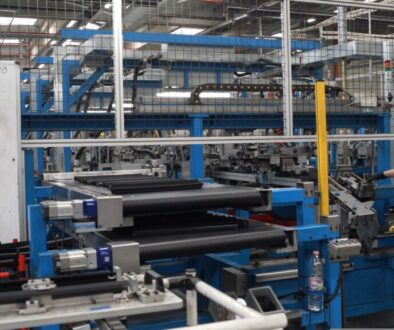
A prime example of this transformation is Costa Rica, where targeted FDI enabled an upgrade in production from light manufacturing, such as food and beverages, to high-tech manufacturing in medical devices and pharmaceuticals.
Costa Rica is now a global manufacturing hub for medical devices, home to more than 90 multinational medtech companies, and Latin America’s second-largest medical device exporter and the eighth-largest in the world.
Factors Behind the Medical Device Success Story include:
- Stable democratic and political environment.
- Highly skilled and educated workforce.
- Extensive network of trade agreements.
- Competitive Free Trade Zone regime.
- Strong collaboration between government, academia, and industry.
Since its establishment in 1990, the Free Trade Zone regime has attracted more than 500 multinational companies through tax incentives, tariff exemptions, and favorable regulations.
The sophistication of output has grown alongside its scale. Growth in the export sector has been accompanied by increased production sophistication, shifting from an almost exclusive focus on disposable medical products in 2000 to a significant increase in high-value-added diagnostic equipment and therapeutic devices, which today account for approximately 25% of the sector’s total production.
Beyond manufacturing, knowledge-based services have expanded rapidly. The evolution of services was marked by a transition from traditional contact centers and low-complexity BPO activities to specialized shared services, including engineering.
Services now account for 43% of total exports, providing an important buffer against commodity price swings and deepening the economy’s overall resilience.
Creating a Virtuous Cycle of Investment, Innovation, and Talent
Minister Trejos has described Costa Rica’s development model as a self-reinforcing virtuous cycle in which quality investment attracts skilled talent, skilled talent enables more sophisticated investment, and both together generate innovation, technology transfer, and employment.
The Costa Rican productive transformation is perhaps best understood through this cycle. Rather than relying solely on tax incentives, Costa Rica has steadily built an ecosystem where businesses can find the talent, infrastructure, and institutional stability necessary for long-term success.
Costa Rica has been the fastest-growing OECD country for two consecutive years, with economic growth fueled by exports, FDI reaching a historic high in 2024, up 14%, and investment now supporting more than 700,000 people in export-related employment.
According to the OECD:
“Costa Rica’s well-educated talent pool has been a strategic factor in attracting foreign direct investment and boosting exports in knowledge-intensive sectors.”
The result is an ecosystem in which multinational companies transfer technology and management practices to local partners, continuously raising the ceiling on what Costa Rica’s workforce can produce.
Remaining Challenges: Informality and Productivity
Despite these achievements, significant structural challenges persist.
Informality, at around 45% of total employment, remains high and is both a cause and a consequence of low productivity. A comprehensive strategy is required to reduce it, with actions needed in several policy areas:
- Policy Priorities to Reduce Informality
- Lower non-wage labor costs.
- Simplify business registration procedures.
- Reduce administrative burdens on entrepreneurs.
- Expand vocational and technical training.
- Modernize and simplify tax compliance systems.
The reasons businesses remain informal include administrative costs, the complexity of the company-formation process, and the costs of formalization, especially in terms of social contributions.
These dynamics are not unique to Costa Rica — around half of all workers in Latin America are in informal jobs, a reality that keeps productivity stagnant. Addressing informality is therefore not just a social equity imperative; it is central to sustaining the long-term competitiveness demanded by Costa Rica’s development model.
Human Capital Development as a Strategic Priority
Costa Rica has long understood that trade agreements and investment incentives are only as effective as the workforce behind them.
The country’s commitment to human capital has deep institutional roots, including the Political Constitution of 1948, which established the state’s obligation to promote employment, and the creation of the National Training Institute (INA) in 1983, which plays an essential role in enhancing employability by offering training services, technical support, and skills certification.
Technical and vocational pathways are treated as equals alongside university education, ensuring that advanced manufacturing and services sectors have access to a pipeline of qualified workers at every level.
Costa Rica ranks among the top five countries in Latin America for English proficiency, an essential capability for high-value knowledge-based services.
These investments in human capital directly support economic inclusion, as quality formal employment raises living standards and narrows inequality — giving the country’s growth model a social dimension as meaningful as its economic one.
As many international investors have discovered, Costa Rica’s greatest competitive advantage is not merely its location or incentives, but the capabilities of its people.
The Impact of OECD Membership on Public Policy
Costa Rica formally joined the OECD in 2021, becoming the first Central American country to do so.
Membership has since served as a framework for institutional modernization and evidence-based policymaking. The OECD has recommended lightening Costa Rica’s more burdensome business regulations, reducing barriers to firm entry, and reducing the tax system’s reliance on social security contributions to lower the cost of formal labor and help boost formal job creation.
Adherence to OECD standards has also strengthened investor confidence, reinforcing the political and institutional stability that multinationals cite as a core reason for choosing Costa Rica.
Costa Rica chaired the 2025 OECD Ministerial Council Meeting, with Minister of Foreign Trade Manuel Tovar noting the country’s role as:
“A steadfast advocate for regional priorities, a champion of high standards, and a driving force behind efforts to build a more inclusive and representative OECD.”
Conclusion
The Costa Rican economic transformation is one of the most instructive in Latin America. Through consistent commitment to trade openness, strategic FDI attraction, and investment in human capital, a small country once dependent on coffee and bananas has become a global leader in medical device exports, knowledge-based services, and high-complexity manufacturing.
The country’s productive transformation illustrates what can happen when long-term vision, institutional stability, and human capital development work together toward a common objective. Challenges around informality and productivity remain real and require sustained policy attention. Yet the broader arc of Costa Rica’s journey — from agricultural dependence to sophisticated integration into global value chains — offers a replicable template.
For Latin American nations seeking a path to inclusive, productive, and sustainable economic growth, Costa Rica’s experience is not simply an achievement to admire; it is a lesson worth studying closely.
Contact Us
Please use this form to contact us and we will respond as soon as possible: