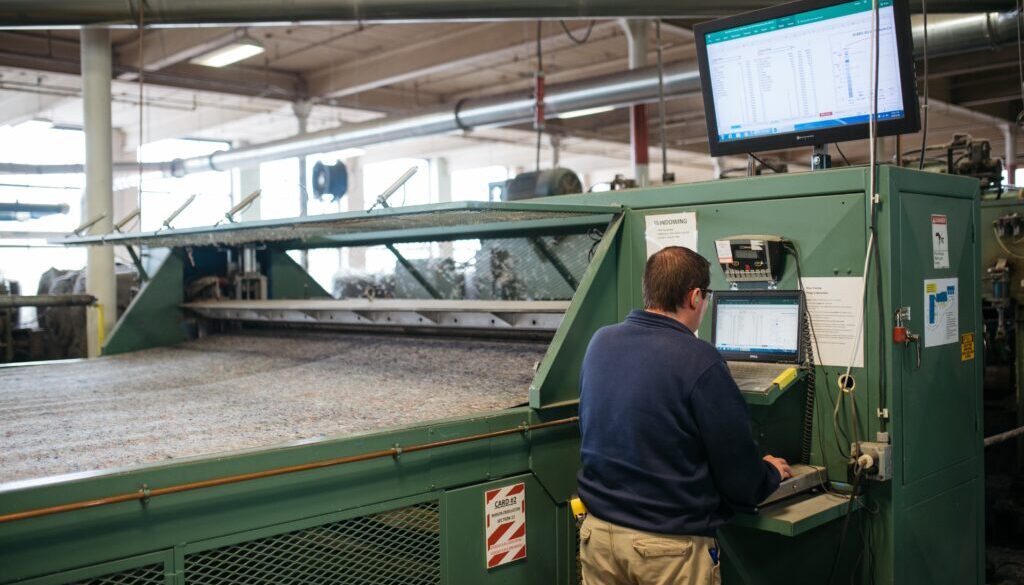
Salvadoran Industry Fuels Economic Expansion and Export Success in 2026
Table of Contents
Contact the Central American Group to explore the foreign investment options in El Salvador and Costa Rica.
El Salvador entered the second half of 2026 with a stronger economic outlook than previously anticipated. The Economic Commission for Latin America and the Caribbean (ECLAC) has raised its forecast for the country’s economic growth this year to 3.9%, an increase of 0.5 percentage points from its April projection.
The revised forecast would match the country’s estimated growth rate in 2025, suggesting that the economy of El Salvador is maintaining its momentum rather than experiencing the slowdown that had previously been anticipated.
More importantly for businesses and investors, the performance of the economy of El Salvador is part of a broader Central American trend. ECLAC expects the subregion to grow by approximately 4% in 2026, making it the fastest-growing part of Latin America and the Caribbean.
A Stronger Outlook for El Salvador
ECLAC’s new projection represents its most optimistic growth forecast for El Salvador so far this year. The organization expects growth to moderate only slightly in 2027, when the economy is projected to expand by 3.7%.
Recent economic data provide some support for that outlook. Financial firm EMFI reported that the economy of El Salvador expanded by 4.6% year over year during the first quarter of 2026, with private consumption as well as construction and public infrastructure investment helping drive activity.
That combination is significant. Consumer spending provides an important foundation for domestic demand, while construction and infrastructure investment can create jobs, stimulate demand for materials and services, and improve the country’s productive capacity.
For companies evaluating El Salvador as a manufacturing or logistics location, sustained economic expansion can also signal growing domestic demand and improving business conditions.
Central America Is Outpacing the Rest of Latin America
El Salvador’s improved forecast becomes even more notable when viewed against the broader regional picture.
ECLAC expects Central America to grow by 4% in 2026, substantially above its forecast of 2.2% for Latin America and the Caribbean as a whole.
The Central American growth rankings are particularly strong:
- Nicaragua: 4.5%
- Panama: 4.4%
- Guatemala: 4.0%
- El Salvador: 3.9%
- Costa Rica: 3.7%
- Honduras: 3.5%
The contrast with the rest of Latin America is considerable. ECLAC expects the region as a whole to grow only 2.2% this year, compared with 2.4% in 2025.
For international manufacturers and other companies considering nearshoring strategies, this relative performance matters. A region growing faster than its major regional peers can offer a more favorable investment environment, particularly when growth is accompanied by infrastructure development, expanding consumer markets, and access to international trade routes.
Remittances Remain a Critical Economic Engine
One of the most important factors supporting several Central American economies is the continued strength of remittance flows.
During the first quarter of 2026, remittances to the Central American isthmus showed what ECLAC described as a “resilient dynamic.” Honduras recorded the strongest growth at 25%, while El Salvador and Guatemala each registered 19% growth.
The figures become even more significant when viewed across the first six months of the year. The three countries of the Northern Triangle—El Salvador, Guatemala and Honduras—received a combined $24.55 billion in remittances between January and June, an increase of 7.8% from the same period in 2025.
El Salvador alone received approximately $5.06 billion.
That amount is equivalent to roughly 24% of the annual GDP of the economy of El Salvador, underscoring just how important remittances are to the nation’s economy. More than 1.91 million people received at least one remittance during the first half of the year.
ECLAC points to the importance of these flows for external stability, particularly in countries where remittances exceed 20% of GDP.
Growth Comes With Risks
The improved forecast should not be interpreted as evidence that El Salvador or the broader region is insulated from global economic pressures.
ECLAC has identified several factors that could weigh on growth, including:
- Geopolitical conflict in the Middle East.
- Volatility in international energy markets.
- Slower growth among major trading partners.
- Weak external demand.
For El Salvador and its Northern Triangle neighbors, there is another potential concern: the 1% U.S. tax on remittances.
The International Monetary Fund has identified the measure as a factor that could moderate remittance flows during the year. A sustained decline could have consequences well beyond the families receiving money from abroad. Because remittances support household consumption and provide a major source of foreign exchange, weaker flows
Central America’s Advantage—and Latin America’s Challenge
Central America’s performance also highlights a larger structural problem facing Latin America.
Despite the region’s 2026 growth forecast, ECLAC warns that Latin America and the Caribbean are entering a fifth consecutive year of relatively weak growth, averaging approximately 2.3% annually.
That pace is not considered sufficient to generate substantial improvements in per-capita income or close the region’s longstanding development gaps.
In other words, Central America may be outperforming its neighbors, but the broader economic environment remains challenging.
For policymakers and investors alike, this makes productivity, infrastructure, workforce development, and international competitiveness increasingly important.
What Does This Mean for Investors?
For international companies, particularly manufacturers, the stronger growth outlook of the economy of El Salvador provides another data point supporting the country’s investment proposition.
Economic growth does not by itself determine where a company should locate a factory. Investors also need to consider:
- Workforce availability and labor costs.
- Infrastructure and utilities.
- Access to ports and transportation networks.
- Trade agreements and access to major markets.
- Investment incentives.
- Supply-chain connectivity.
- Political and economic stability.
The performance of the economy of El Salvador should therefore be considered as part of a broader Central American investment equation. With the subregion expected to grow twice as fast as Latin America and the Caribbean overall, companies pursuing nearshoring strategies may increasingly view Central America as an alternative production platform.
The Outlook for 2027
ECLAC expects the broader Latin American economy to improve modestly in 2027, with regional growth projected at 2.5%.
Central America is again expected to outperform.
Among the projections for next year:
- Panama: 4.6%
- Guatemala: 4.1%
- Costa Rica: 3.9%
- El Salvador: 3.7%
For El Salvador, that would represent only a modest deceleration from its 2026 performance.
A Positive Signal for El Salvador
ECLAC’s revised 3.9% growth forecast is an encouraging signal for the economy of El Salvador. The country is benefiting from solid domestic demand, construction and infrastructure investment, and continued remittance inflows.
At the same time, external risks remain, particularly those affecting energy prices, international demand and remittances.
The bigger story, however, is Central America’s relative economic strength. With the subregion projected to grow by 4% in 2026, it is emerging as one of Latin America’s most dynamic areas for economic activity and investment.
For companies seeking competitive production locations, resilient supply chains, and proximity to the U.S. market, that performance deserves attention. El Salvador’s improved economic outlook is not simply a better number on a forecast table—it is another indication that Central America is becoming increasingly relevant to the next generation of international investment.
Contact Us
Please use this form to contact us and we will respond as soon as possible: